April 2, 2026
If you are eyeing a duplex, triplex, or small multifamily property in Littleton, it is easy to focus on the listing photos and projected rent. The smarter move is to slow down and look at the local rules, real income benchmarks, and the condition risks that come with an older housing stock. If you want a practical starting point for investing in Littleton small multifamily, this guide will help you understand what to check first, what numbers to use, and where caution matters most. Let’s dive in.
Littleton stands out as a mature suburban market with a solid income base and strong local appeal. The U.S. Census Bureau reports a population of 45,652 and a median household income of $98,839, which helps explain why housing demand has remained durable.
The city’s own planning materials also point to high housing prices and low supply as signs of demand. In the city’s resident survey, top reasons people live in Littleton included location, parks and recreation, open space, and safety. For an investor, that signals a market where well-located housing can continue to attract renters, but it also means buying in usually requires disciplined underwriting.
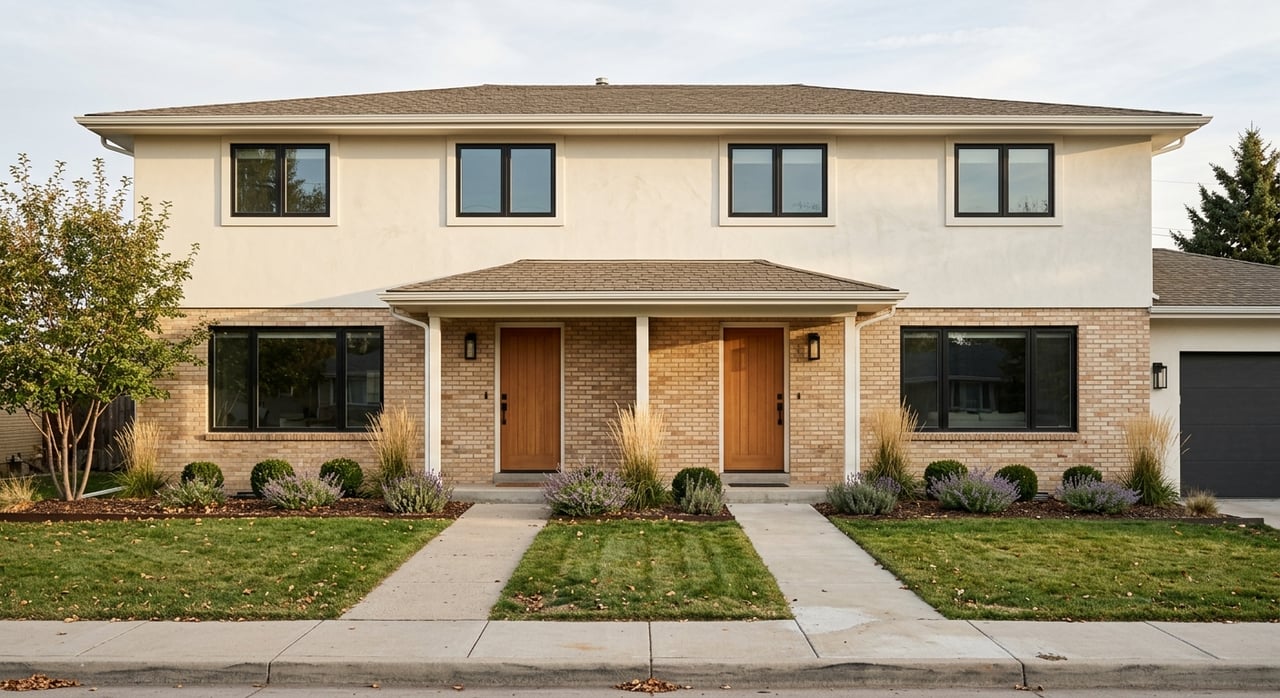
Littleton is not only a single-family market. According to the city’s housing appendix, 46% of the housing stock was attached in 2017.
That attached share included 20% in structures with 2 to 9 units and another 26% in buildings with 10 or more units. For you, that means duplexes and other small multifamily properties are part of the local housing mix, even if inventory can feel limited at any given time.
Current listings show a fairly wide price band for entry into the market. Redfin’s Littleton multifamily page shows active inventory with a median listing price of $599,000, with examples ranging from new-construction duplexes in roughly the high-$500,000s to larger duplex offerings around $1.1 million.
That spread matters because not all duplexes or triplexes solve the same investment goal. One property may offer easier maintenance and newer systems, while another may have better income potential but more near-term repair costs. Price alone does not tell the full story.
One of the most important Littleton-specific details is jurisdiction. The city makes it clear in its ULUC and zoning portal that a Littleton mailing address does not always mean the property is actually inside Littleton city limits.
That can affect zoning, licensing, and what local rules apply. Before you get too deep into underwriting, confirm whether the parcel is in the city. That first step can save you from building a plan around standards that do not apply to the property.
Once city limits are confirmed, zoning is the next gatekeeper. Littleton’s zoning portal points you to the Unified Land Use Code, interactive zoning map, and land-use matrix so you can verify whether a parcel can legally support a duplex, triplex, or larger multifamily use.
This matters for both buy-and-hold investors and small developers. The city adopted new zoning regulations in 2021 and a new zoning map in 2022, and some Planned Development Overlays can have unique standards that are not posted online. If a property seems to have upside because of lot size or layout, verify the permitted use before you count on it.
A common mistake in small multifamily investing is underwriting to best-case rent. In Littleton, a more careful approach is to use HUD Small Area Fair Market Rents for FY2026 as a conservative benchmark.
For example, HUD lists these monthly figures for key Littleton-area ZIP codes:
These are not the same as asking rents. They are better used as a downside or stress-test benchmark when you are trying to avoid overestimating income.
Let’s say you are analyzing a duplex with two 2-bedroom units in ZIP code 80120. Using the HUD benchmark, that would produce gross scheduled rent of about $3,860 per month.
After a 5% vacancy allowance, annual income would be about $44,004 before operating expenses. That does not tell you what the property is worth by itself, but it gives you a grounded starting point for testing whether the asking price makes sense.
The broader metro rental picture also argues for restraint. In its July 2025 vacancy and rent report, the Apartment Association of Metro Denver reported that average rents were down 3.7% year over year, metro vacancy was 6.4%, Arapahoe County had the highest county vacancy at 7.1%, and properties with fewer than 100 units had 6.8% vacancy.
For a Littleton investor, that is a reminder not to bank on fast rent growth just because the city is desirable. You are usually better off assuming flat or modest rent growth and making sure the property still works under realistic vacancy.
Condition is a major part of the Littleton story. The city’s housing appendix says 71.7% of the housing stock was at least 30 years old.
That does not mean older duplexes and triplexes are bad investments. It does mean you should expect more variation in upkeep, renovation quality, and remaining life of major systems. A property that looks updated may still need work on roofing, drainage, electrical, plumbing, or other capital items.
In older small multifamily properties, updates often happen in phases. One owner may remodel kitchens and baths, while another defers exterior work or mechanical upgrades.
That is why cosmetic improvements should never end your diligence. In Littleton, aging housing has often gone through renovation, addition, or rebuild cycles, and some properties may also face added review if they are in a designated historic district or landmark area.
If you are buying three or more residential units in Littleton, you also need to understand the city’s rental registration requirements. Multiple-family residential structures with three or more units must register, renew annually by April 1, and maintain a Denver metro agent who can authorize emergency repairs and allow inspector entry if the owner is unavailable.
The current annual fee is $75 for properties with 3 to 25 units and $125 for 26 or more units. Even for smaller properties, this is a good reminder that operational compliance is part of the investment, not just acquisition.
Littleton also states that its code compliance division systematically inspects multiple-family rental housing for compliance with city codes. That means maintenance issues can become business issues if they are not addressed early.
For you, this reinforces the need to budget for repairs and ongoing upkeep. If a deal only works by delaying maintenance, it may not be as strong as it first appears.
If your strategy includes short-term rental income, do not assume a duplex gives you flexibility by default. Littleton requires short-term rental licensing, and the city states that a duplex or two-family dwelling can qualify as a short-term primary rental only if the connected unit is the owner’s primary residence and both units are on the same lot.
That is a narrow rule, and it may change how you evaluate a property. If short-term income is central to your plan, verify the licensing path before you move forward.
A practical underwriting process for Littleton small multifamily should be conservative and evidence-based. Freddie Mac’s guidance notes that effective gross income is generally based on trailing three months of actual rent collections or the annualized current rent roll minus at least a 5% vacancy rate, with operating expenses generally based on trailing 12 months. The same source notes replacement reserves are typically required at the greater of the engineer’s recommendation or $250 per unit, while Fannie Mae references a minimum replacement reserve of $300 per unit per year.
In plain terms, you should rely on actual property performance whenever possible. If the seller presents a strong pro forma, compare it against current collections, a realistic vacancy assumption, and reserve needs for future capital work.
Before you write an offer on a Littleton duplex, triplex, or small multifamily property, focus on these basics:
In a market like Littleton, the best opportunities are not always the ones with the most polished marketing. Sometimes the real edge comes from understanding zoning, spotting condition issues early, and knowing when the numbers are too optimistic.
That is where construction-informed representation can make a real difference. When you can pair market context with a sharp eye for property condition and realistic operating assumptions, you are in a much better position to buy with confidence.
If you are considering a Littleton investment property or small multifamily purchase, working with Nick Evancich gives you a local advisor who understands both market strategy and the physical realities that can shape your return.
Stay up to date on the latest real estate trends.



Erie Colorado Real Estate
Erie Airpark Homes for Sale | Living in Erie, Colorado

Evergreen Colorado real estate
Discover Evergreen’s Luxury Homes, Mountain Estates, Acreage, Views and the Colorado Lifestyle—Just Minutes From Denver

Denver Luxury Real Estate
A Homebuyer's Guide to Custom Estates, Luxury Communities, and Unobstructed Rocky Mountain Views